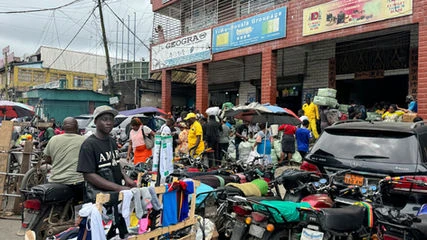
When I visited a village in Togo, I saw a large group of people dressed up and dancing for celebration. My guide told me that they were having a funeral and the traditional funerals in Togo looked very different from traditional Eastern and Western funerals, which made me curious enough to research further. Below is some information regarding funeral rituals in Togo, U.S., and China.
Togo
Funeral practices vary between cultural groups, but generally, funerals contain many of these elements. The first step of a traditional funeral in Togo begins with the Wake, a period for communal prayer, drumming, and singing, offering an atmosphere for reverence and reflection. It is a time for the mourning and remembrance of the dead as a community. The second step is the burial where the body of the deceased is clothed in their best clothes to show honor and respect for the departure. It is seen as an act of returning to the earth. Celebrations follow the burial where traditional masquerades and theatrical performances celebrate the deceased. Post-funeral rituals may happen a long time after the funeral. They reinforce an enduring connection between the living and the dead.
Excluding post-funeral rituals that could happen months or even years after the burial, a traditional Togolese funeral can last from days to weeks depending on the family customs and the social status of the deceased. At funerals, people often wear black, red, or white clothing, including traditional clothes such as Boubou or Kente. An important characteristic of Togolese funerals is that they are very community-focused. Not only does the family of the deceased take part in the funeral, but the whole community contributes to the celebrations and mornings.
Image of traditional Togo clothing - Kente
U.S.
A traditional U.S. funeral starts with the viewing. This is typically held at funeral homes where the body of the deceased is displayed in a casket along with his or her photos and prized possessions to present their accomplishments and hobbies. The funeral service after the viewing may include prayers and reading sacred texts at a church, or a nonreligious celebration. If the deceased wishes to be buried, there will be a burial service directly after the funeral service held at the place the body will be laid to rest. People often read eulogies or sing hymns during the funeral service or burial service. After the two services, a gathering of the close relatives and friends of the deceased may be held at the family’s home or a separate location.
The viewing, funeral, and burial services would usually last a few hours to a day if there are no additional family rituals. Traditionally, proper funeral etiquette in the U.S. suggests that people wear black at a funeral. U.S. funerals are generally very private, while some open up to the public, most only invite close family and friends.
In recent years, cremations, the final deposition of a dead body through burning, have risen continuously. Many Americans are choosing cremation as an alternative method of body disposal. Rather than burial for the whole body of the deceased, cremation reduces the dead body to ashes, then these ashes are disposed of by burial or scattering.
China
Traditionally, families play a key role in organizing funerals in China. The traditional mourning period ranges from one year to three years depending on the family role of the deceased. During this period, eating meat, drinking alcohol, holding weddings, and other forms of entertainment are all prohibited. Before the funeral, many arrangements have to be made. Chinese families usually contact a feng shui master to choose the date, time, and location and orientation of the gravesite for the funeral and burial.
There is commonly a 3-day visitation period. The deceased is often dressed in their finest attire, and the visitation area is usually set up in a funeral home that contains an altar with a portrait of the deceased displayed in the middle. There is also a tradition of overnight vigils, where family members stay with the deceased throughout the night to ensure the spirit of the dead isn’t alone on his/her path to the afterlife.
Then comes the funeral ceremony. White or yellow mums are usually used in Chinese funerals. Many large wreaths and sprays of flowers would be seen at the visitation and funeral ceremony. Incense, joss paper (spirit money), and miniature items like cars and houses are burned throughout the service as they are believed to follow the deceased into the afterlife and the spirit world. After the ceremony, the funeral proceeds to the cemetery, where the oldest son or grandson of the deceased leads with a large portrait of the dead and the coffin while other family members and guests follow suit. The deceased is usually buried or cremated. Families visit and clean the gravesite at least annually during the Qing Ming Festival.
Family and guests of a funeral typically wear plain white or brown burlap clothes. Mourners will wear an armband to show that they are in a period of mourning. The band is worn on the left sleeve if the deceased is a man and worn on the right sleeve if it is a woman. Bright or colorful clothes are avoided during the years of mourning.